
Sarnath, First Sermon Of Buddha
SARNATH– The Great Holy Place Of Buddhism
Buddhism was founded by Gautama Buddha in the 5th century BC. Sarnath is the sacred land, 10km northeast of Varanasi. The Deer Park in Sarnath is where Gautama Buddha first taught the Dharma, and where the Buddhist Sangha came into existence. Also referred to as Isipatana, this city is mentioned by the Buddha as one of the four places of pilgrimage his devout followers should visit. It was also the site of the Buddha’s Dhammacakkappavattana Sutta, which was his first sermon after attaining enlightenment, in which he explained the four noble truths and the teachings associated with them.

Tour Highlights
✔ Visit the Sacred Deer Park where Buddha preached his first sermon
✔ Explore the Historic Dhamek Stupa
✔ Visit Chaukhandi Stupa and Mulgandha Kuti Vihar
✔ Discover Ancient Buddhist Monasteries and Ruins
✔ Explore the Archaeological Museum of Sarnath
✔ Learn About the Life and Teachings of Lord Buddha
✔ Peaceful Atmosphere for Meditation and Reflection
Major Attractions Covered
- Dhamek Stupa
- Chaukhandi Stupa
- Mulgandha Kuti Vihar
- Archaeological Museum
- Ashoka Pillar Site
- Deer Park
- Thai Temple
- Tibetan Temple
- Japanese Temple
Foot Steps Of Buddha-
Among the Buddhist holy places in India, Sarnath enjoys the same significance as the
Jerusalem for Christians & the Golden Temple for the Sikhs. Sarnath is equally renowned in India and abroad for its religious tradition, art, and relics of Buddha found during archaeological excavations.
FOUR NOBLE TRUTHS-
In Buddhism, the Four Noble Truths (Sanskrit- Chatvari Arya Satyani). The truths are:
- 1- Dukkh, Suffering, incapable of satisfying.
- 2- Samudaya, (origin, arising) of the Dukkha, there is a reason for suffering.
- 3- Nirodha, (Cessation, Ending) of this Dukkha can be attained by renouncement, There are paths, way to end this suffering.
- 4- Marga, (Path, Noble Eightfold Path) is the path leading to the renouncement of tanha.
The Noble Eightfold Path-
(Sanskrit- Aryastangamarga) is an early summary of the path of Buddhist practices leading to liberation from samsara.
The Eightfold Path consists of eight practices;
- 1- Right View
- 2- Right Resolve
- 3- Right Speech
- 4- Right Conduct or Action
- 5- Right Livelihood
- 6- Right Effort
- 7- Right Mindfulness &
- 8- Right Meditation.
PANCHSHEEL OR FIVE PRECEPTS
The Five Precepts (Sanskrit- Panchsila) or five rules of training is the most important system of morality for Buddhist laypeople. They constitute the basic code of ethics to be respected by lay followers of Buddhism.
- 1- The first Precept consists of a prohibition of killing, both humans and all animals.
- 2- The second precept prohibits theft and related activities such as fraud and forgery.
- 3- The third precept refers to adultery in all forms.
- 4- The fourth precept involves falsehood spoken or committed to by action.
- 5- The fifth precept prohibits intoxication through alcohol, drugs or other means.
History & Major Attractions Of Sarnath
Sarnath the sacred land, 10km norht-east of Varanasi. The Deer Park in Sarnath is where Gautama Buddha first taught the Dharma, and where the Buddhist Sangha came into existence. Also referred to as Isipatana, this city is mentioned by the Buddha as one of the four places of pilgrimage his devout followers should visit. It was also the site of the Buddha’s Dhammacakkappavattana Sutta, which was his first sermon after attaining enlightenment, in which he explained the four noble truths and the teachings associated with them.
Dhamekh Stupa Or Dharmarajika Stupa
DHAMEK STUPA
The Dhammekh Stupa is very famous in the Buddhist world. This is a solid cylindrical tower, 28.5 m in diameter at the base, and 33.53 m in height. The exact spot where Lord Buddha delivered his first sermon.
The Dhammekh Stupa is very famous in the Buddhist world. This is a solid cylindrical tower, 28.5 m in diameter at the base, and 33.53 m in height. The exact spot where Lord Buddha delivered his first sermon.
Mulgandhkuti Vihar Temple
The main Buddhist temple, built by Ven. Aangarika Dharampla. The temple work was started in 1931. Inside the Temple, there is a Buddha beautiful Buddha Image, and beautiful fresco paintings on the walls done by a Japanese artist, Kosetsu Nusu.
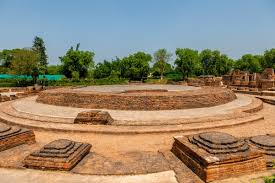
Dharmarajika Stupa
The stupa was erected by Emperor Ashoka. As its name implies, the Dharmarajika Stupa contained Lord Buddha’s bone relics. During the demolition, inside it, at a depth of 8.25 meters from the top.
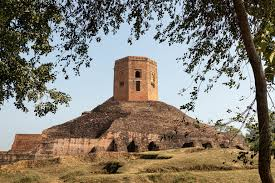
Chaukhandi Stupa
The Chinese Buddhist traveler, Hiuen-Tsang saw it standing 300 ft heigh. Presumably, the group of five ascetics first met Lord Buddha Here.
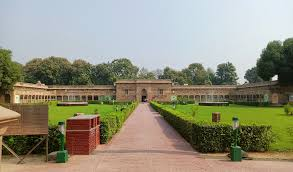
ARCHEOLOGICAL MUSEUM -
The Archaeological Museum was built in 1910 A.D. to preserve the thousands of objects obtained during the excavation at Sarnath.

BODHI TREE -
The Bodhi Tree (“tree of awakening”), also called the Bodhi Fig Tree, was a large and ancient sacred fig tree (Ficus religiosa) located in Bodh Gaya, Bihar, India. Siddhartha Gautama, the spiritual teacher who became known as the Buddha, is said to have attained enlightenment or Bodhi circa 500 BCE under it.
Includes
- Private Transportation (Optional)
- Professional Local Guide (Optional)
- Sightseeing Assistance
- Flexible Tour Timings
Book Your Sarnath Tour Today and Explore the Birthplace of Buddhist Teachings in India!
Book Your Tour With Confidence | Get Big discount

Ashokan Pillar, The Lion Capital
Ashokan Pillar or the lion Capital adopted as the National Emblem of India. It is a masterpiece having a height of 2.35 meters, but the original piece was having a height of 15.35 meters and was surmounted by the famous Lion capital with a crowning Dharmachakra.

Tallest Buddha Statue
The tallest Buddha statue in Sarnath, Former prime minister of Thailand, Surayud Chunalot, and former Governer governor of Lord Abbot Wat Dhamma Suthi unveiled the 80-ft statue made from sandstone on the occasion.

The Dhammachakrapavattana Statue
Indian art was taken to such heights during the Gupta period that the world is now amazed to see it. The contribution ‘of the Guptas in the development of the Indian sculpture has been tremendous.